Yuxi Normal University (YXNU) is a provincial full-time public undergraduate university. Its origins date back to 1978 with the establishment of the Yuxi Teacher Training Program, authorized by the Yunnan Provincial Government. In 1983, the institution was upgraded to Yuxi Teachers College, and in 1992, it was renamed Yuxi Advanced Teachers College with the approval of the former State Education Commission. In 2000, the Ministry of Education officially authorized the establishment of Yuxi Normal University. A significant milestone was reached in 2024, when the university was formally granted the status of a master's degree-conferring institution.
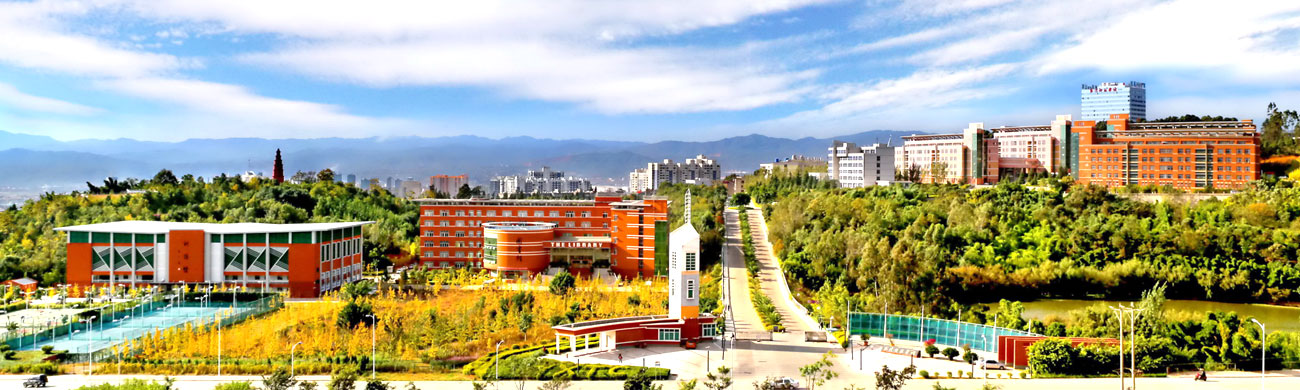
Located in Yuxi—a celebrated city in central Yunnan known as the "Highland Water Town" and one of China's Top 10 Most Livable Ecological Cities—the university is the closest regional institution to Kunming, the provincial capital. As the proud hometown of the renowned composer Nie Er, Yuxi provides an inspiring backdrop for our campus, which covers an area of 1,014.45 mu (approximately 167 acres).
Institutional Structure & Population
The university maintains a robust organizational framework to support its mission:
Administrative & Academic Divisions: 13 administrative departments, 19 teaching and research institutions, 16 service support units, 6 auxiliary organizations, and 1 office of the Yunnan Provincial Supervisory Commission.
Enrollment & Faculty: Currently, the university serves 14,214 full-time students with a dedicated staff of 953 faculty and personnel.
Mission & Impact
Guided by the motto "Seek Truth, Goodness, Beauty, and Utility," the university is deeply rooted in Yuxi and central Yunnan while extending its influence throughout the province and into Southeast Asia. To date, we have cultivated over 80,000 qualified professionals who serve in basic education and contribute to the socio-economic development of the region.
Honors & Recognitions
The university has been successively awarded numerous prestigious honorary titles, including:
National Civilized Campus
National Civilized Unit
National Advanced Unit in School Art Education
National Advanced Unit for Aesthetic Education in Higher Education
National Excellent Unit for "Going to the Countryside" Summer Social Practice (Student Volunteers' Cultural, Scientific, and Medical Service)
National Base for Language and Script Promotion
First Batch of Pilot Units for the Ministry of Industry and Information Technology’s Specialized Cyber Security Industry-Education Integration Innovation Center
Yunnan Provincial Advanced Unit for Graduate Employment and Entrepreneurship
Yunnan Provincial University Innovation and Entrepreneurship Center for Practical Education
Yunnan Provincial Demonstration School for Socialist Core Values Education
Provincial Demonstration School for Education on Forging a Strong Sense of Community for the Chinese Nation
Yunnan Provincial Base for Science Popularization
Yunnan Provincial Training Base for Basic Education Teachers
Provincial Protection and Inheritance Base for Intangible Cultural Heritage
The university remains committed to the fundamental task of fostering virtue through education. We focus on cultivating well-rounded socialist builders and successors who possess a strong sense of national identity, professional expertise, an innovative spirit, and practical capabilities, excelling across the five domains of moral, intellectual, physical, aesthetic, and labor education.
Disciplines and Degree Programs
The university has established a comprehensive academic hierarchy:
Master’s Programs: 3 authorized master's degree points and 7 provincial-level cultivation sites for future master's programs.
Key Disciplines: 1 Provincial First-Class Discipline (Class B Plateau Discipline), 1 discipline under the Provincial "New Discipline Cultivation Plan," and 5 Provincial Key Disciplines.
Undergraduate Education and Curriculum
We offer 57 full-time undergraduate majors, with 49 currently admitting students. Our high-quality educational resources include:
Specialized Majors: 1 National-level Characteristic Major, 1 Provincial Key Construction Major, and 3 Provincial Characteristic Construction Majors.
Tiered Excellence: 13 Provincial "First-Class" Majors, 3 Provincial "Class B" Majors, 1 Provincial "Emerging" Major, and 1 Provincial Pilot Major for Serving Industries.
Premier Courses: 2 National First-Class Courses, 21 Provincial First-Class Courses, 9 Provincial Excellent Courses, 1 Provincial Bilingual Teaching Demonstration Course, and 6 Provincial Demonstration Courses in "Curriculum Ideology and Politics."
Professional Accreditation
The university has achieved full coverage of Level 2 Ministry of Education Professional Certification for Normal Majors across all its teacher-training programs. A total of 14 majors have passed this accreditation:
Fine Arts, Physical Education, Mathematics and Applied Mathematics, Geography Science, Physics, Chinese Language and Literature, English, Pre-school Education, Chemistry, Ideological and Political Education, Primary Education, Musicology, Dance, and Biological Sciences.
Student Innovation and Awards
In recent years, our students have demonstrated exceptional competitive strength, securing 124 national-level awards in prestigious competitions, such as:
China International College Students' Innovation Competition
"Challenge Cup" National Undergraduate Extracurricular Academic Science and Technology Contest
"Challenge Cup" China College Students’ Entrepreneurship Plan Contest
National Undergraduate Practical Innovation Competition in New Humanities
National Advertising Art Design Competition for College Students
The university adheres to the strategy of "Strengthening the Institution through Talent." By focusing on both recruitment and professional development, we are committed to building a high-level faculty through comprehensive policies for attracting, nurturing, and effectively utilizing top-tier educators.
Faculty Composition
Our academic community is comprised of 946 staff members, including 788 full-time teachers:
Academic Titles: 89 Professors and 220 Associate Professors.
Educational Background: 266 faculty members hold doctoral degrees, while 403 hold master's degrees.
Distinguished Scholars & Talent Programs
The university is home to a growing number of recognized experts across national, provincial, and municipal levels:
National & Provincial Talent: Includes 1 nationally recognized talent, 1 recipient of the Special Government Allowance, 37 scholars under the "Yunnan Revitalization Talent Support Plan," and 8 Provincial Teaching Masters.
Regional Impact: 79 members are enrolled in the "Xingyu Talent Support Plan," and 24 serve as young to middle-aged academic and technical leaders in Yuxi City.
The "Silver Age" Faculty Initiative
To further enhance academic quality, the university has recruited 41 "Silver Age" (retired) professors from prestigious institutions such as Xi'an Jiaotong University, Northwestern Polytechnical University, Central Academy of Fine Arts, and East China Normal University. This elite group includes:
3 Second-level Professors
15 Doctoral Supervisors
21 Master's Supervisors
These seasoned experts bring a wealth of experience and research excellence to our campus, bridging the gap between national top-tier education and regional academic development.
The university upholds the strategy of "Thriving through Academic Excellence," focusing on strengthening research capabilities and enhancing the integration of research into high-quality teaching.
Research Platforms & Labs
The university hosts a sophisticated network of scientific and pedagogical platforms:
Key Research Facilities: 1 Provincial Key Laboratory, 1 Provincial Field Observation Research Station, and 2 Provincial Academician/Expert Workstations.
Higher Education Centers: 9 Provincial University Key Laboratories and 4 Provincial University Engineering Research Centers.
Teaching & Practical Innovation: 4 Provincial Experimental Teaching Demonstration Centers, 1 Innovation Zone for Talent Cultivation Models, and 2 Provincial Technical Innovation Service Centers for internships and training.
Academic Teams: 4 Provincial Master Teacher Studios, 5 Provincial Teaching Teams, 2 Provincial Philosophical and Social Science Innovation Teams, and 9 Provincial University Science and Technology Innovation Teams.
Scientific Achievements & Funding
In recent years, the university has undertaken 1,127 research projects at various levels:
National Level: 21 projects funded by the National Social Science Fund, 47 by the National Natural Science Foundation, 1 by the National Art Fund, and 1 by the National Ethnic Affairs Commission.
Provincial & International: 320 provincial/ministerial projects, 566 local/departmental projects, and 197 horizontal (industry-collaboration) projects, plus 1 international cooperation project.
Publications: Faculty have published 216 academic monographs and textbooks, along with 2,711 papers. Notably, 620 papers were indexed in SCI, SSCI, EI, and CPCI, including one landmark publication in the journal Science.
Awards & Patents: Over 100 research achievements have received provincial or municipal awards, and faculty members have been granted 206 patents.
Library Resources & Publications
The university library provides a robust foundation for academic inquiry:
Physical & Digital Assets: A collection of over 1.196 million paper books, approximately 940,000 e-books, and 189,000 types of electronic journals.
Comprehensive Coverage: Access to 23 specialized databases, ensuring full coverage across all existing disciplines.
Internal Media: The university publishes two official periodicals: the Journal of Yuxi Normal University and the Yuxi Normal University Newspaper.
The university adheres to the strategy of "Open Governance," actively integrating into and serving the regional socio-economic development. In recent years, YXNU has forged numerous strategic partnerships to expand its educational and social impact.
Local Partnerships & Collaborative Institutes
The university has established a diverse range of collaborative schools and research centers:
Basic Education: In partnership with the Hongta District Government, the university operates the Affiliated Kindergarten, Affiliated Primary School, and Affiliated Experimental School of Yuxi Normal University.
Vocational & Technical Training: Collaborative efforts with the Yuxi Municipal Government and local vocational schools have led to the establishment of the Higher Vocational and Technical College and the Higher Vocational Sports College.
Culture & Ideology: YXNU co-founded the Nie Er and the National Anthem Patriotic Education Base and the "National Anthem Soul" Grand Ideology and Politics Education League in collaboration with elite institutions like the Shanghai Conservatory of Music and East China Normal University.
Specialized Academies: The university has partnered with industry leaders and government bodies to create the Yuxi Internet University (with Huawei), the Cybersecurity College (with Qi-Anxin), and the Maker Academy (with Xinhua Net). It also hosts specialized institutes for Discipline Inspection, Creative Culture, and Local Legislation.
Science & Technology: A notable collaboration with the Yunnan Observatories of the Chinese Academy of Sciences resulted in the creation of the Astronomy Science and Education Center.
International Exchange & Global Reach
Yuxi Normal University maintains stable cooperative relationships with institutions in Thailand, Laos, and Malaysia, while expanding its reach to Bangladesh, Indonesia, and Belarus.
Joint Research: Co-established the China-Thailand Astronomy Research Laboratory with the National Astronomical Research Institute of Thailand and the Thai Physics Society.
International Degree Programs: Implements innovative "2+2" dual-degree programs for Thai language majors, "2+2+1" joint programs for Burmese, and various overseas paid internship initiatives.
Global Footprint: The university currently operates 33 overseas internship bases and 4 international Chinese Language and Culture Centers. It is also an authorized site for the HSK (Chinese Proficiency Test) and a recognized Yunnan Provincial Chinese Education Base.
Looking ahead to the "15th Five-Year Plan" period, Yuxi Normal University remains committed to its strategic vision: staying rooted in central Yunnan and Yuxi, serving the entire province, and extending its influence into Southeast Asia.
Future Objectives & Strategic Pillars
The university has set its sights on two primary milestones: becoming a doctoral degree-granting institution and officially attaining university status (renaming). To achieve these, the university will focus on the following pillars:
Core Drivers: Using disciplinary development as the lead and talent pool construction as the core.
Academic Focus: Prioritizing the enhancement of teaching and research capabilities supported by robust platform building.
Operational Breakthroughs: Actively revitalizing educational resources and deepening institutional reforms to ensure sustainable growth.
Social Impact: Comprehensive improvement of core competitiveness in talent cultivation, scientific research, and social service to increase the university's regional and international influence.
Vision
Our goal is to transform YXNU into a comprehensive teaching and research university—one that maintains its strong foundation in teacher education while developing unique institutional characteristics and a prestigious brand identity.(Note: All data and content statistics are current as of December 31, 2025.)

 学校首页
学校首页